





Last updated: May 2026
What Ortho Practices Get Wrong About Inventory (and How to Fix It)
A general dentist and an orthodontist run the same Just-in-Time advice through the same software. One sees a clear supply cost reduction within a quarter. The other hits a stockout on appliance day, has to call the lab for a rush remake, and watches the savings evaporate.
Same system. Different reality. The reason matters, and it’s the thing every general-dental inventory guide misses: orthodontic practices don’t have the same inventory shape as general dental practices, so the standard playbook doesn’t fit cleanly.
This guide reframes dental inventory management for orthodontic practices specifically. We’ll cover why ortho inventory behaves differently, the two distinct inventory buckets every ortho practice carries, how a lab’s published turnaround replaces traditional safety stock for the fabricated portion of your spend, the case-kit bundling move that produces the biggest single cost reduction, lightweight forecasting that doesn’t require new software, and the five mistakes we see most often from the lab side.
Why Ortho Inventory Is Different from General Dental
Most dental inventory guides are written for general dental practices, and most of them are written by software vendors selling general dental inventory tools. The advice flows from there: reorder points, par levels, safety stock formulas, ABC analysis on consumables. All of it works for a practice running through gloves, burs, composites, sterilization pouches, and impression material at a high volume.
It works less well for an orthodontic practice, because the inventory shape is different.
A general dental practice runs hundreds of SKUs at high turnover. The dominant inventory question is “do I have enough of the things I use every day.” Reorder points solve that cleanly, and the standard formula (Avg Daily Use × Lead Time + Safety Stock) is the right tool.
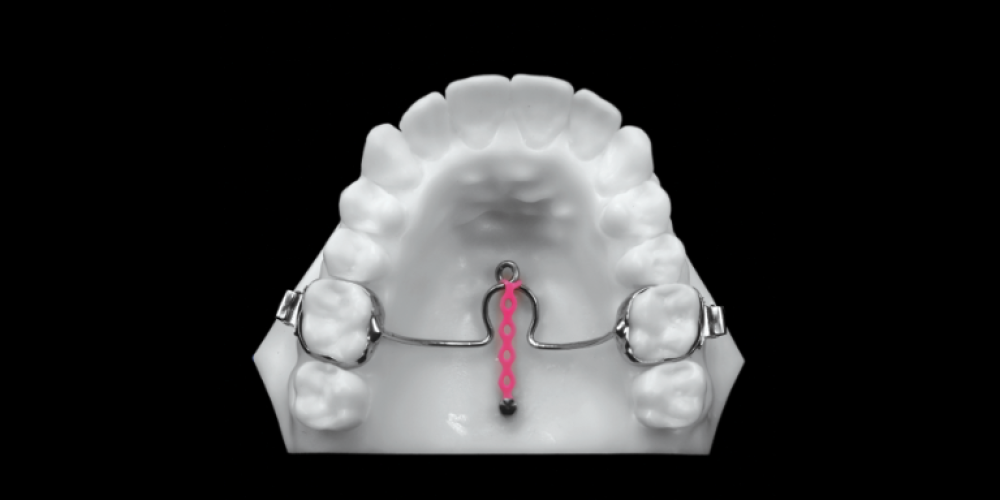
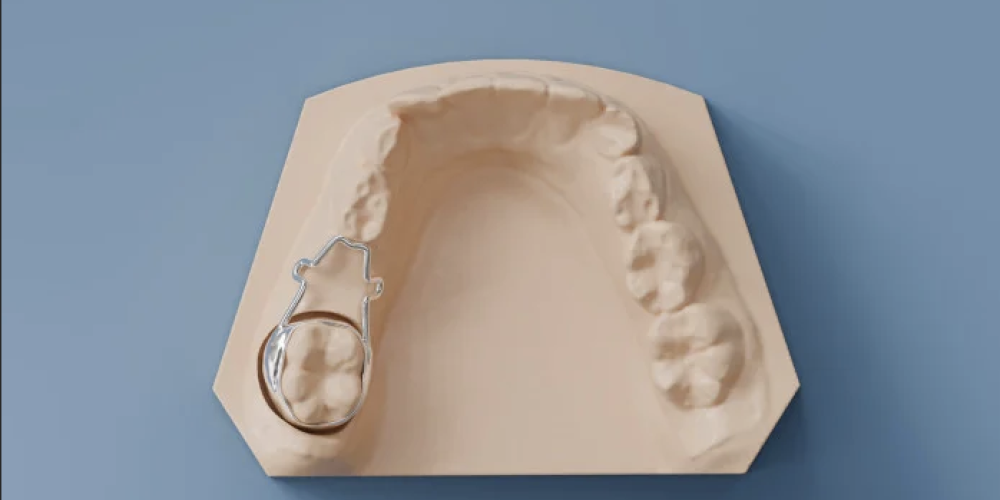
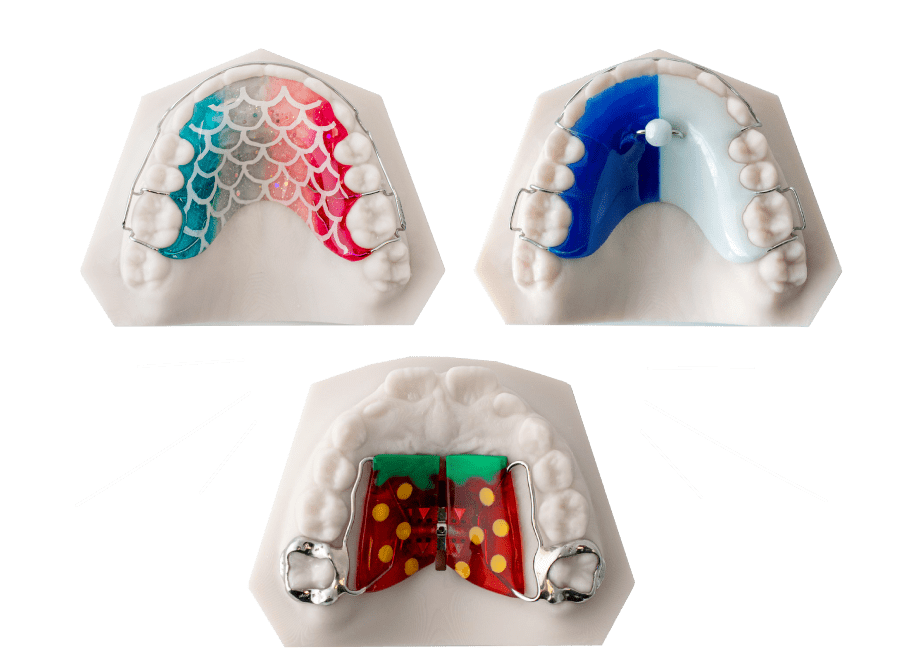
An orthodontic practice runs fewer SKUs at lower turnover for most categories, with one big exception: case-specific custom fabrications. Retainers, expanders, Class II correctors, MARPE, TADs, indirect bonding trays. These aren’t items you “reorder when stock gets low.” They’re items you order per patient, per case, and the lead time is the lab’s turnaround, not a distributor’s shipping clock.
That changes which optimizations actually matter.
For the consumables portion of your spend (brackets, wires, elastics, sterilization, office supplies), the general-dental playbook works fine. Reorder points, par levels, ABC analysis. Use it.
For the custom fabrication portion, the playbook breaks. There’s no “safety stock” of a custom retainer for a patient who hasn’t been impressed yet. The lever that produces results isn’t safety stock optimization. It’s pushing custom fabrication to the lab’s clock with predictable turnaround, and bundling related appliances so one case generates one order instead of three.
Most ortho practices have a meaningful share of supply spend in the second bucket. Treating that share with consumables-grade inventory advice is the underlying error in most “implement JIT” content written for ortho audiences.
The Two Inventory Buckets Every Ortho Practice Has
Dental inventory management for an orthodontic practice means managing two distinct inventory categories with two different strategies. Consumables and capital equipment respond to par levels and reorder points. Custom fabrications respond to lab turnaround predictability and case-kit bundling.
Bucket 1: Consumables and standard supplies. Brackets, archwires, ligatures, elastics, gloves, masks, sterilization pouches, impression materials, office supplies. High SKU count, daily turnover. This is where general-dental inventory tools (Sortly, ZenOne, Method, Weave inventory module) earn their keep. Set par levels, calculate reorder points, run regular cycle counts. Standard playbook.
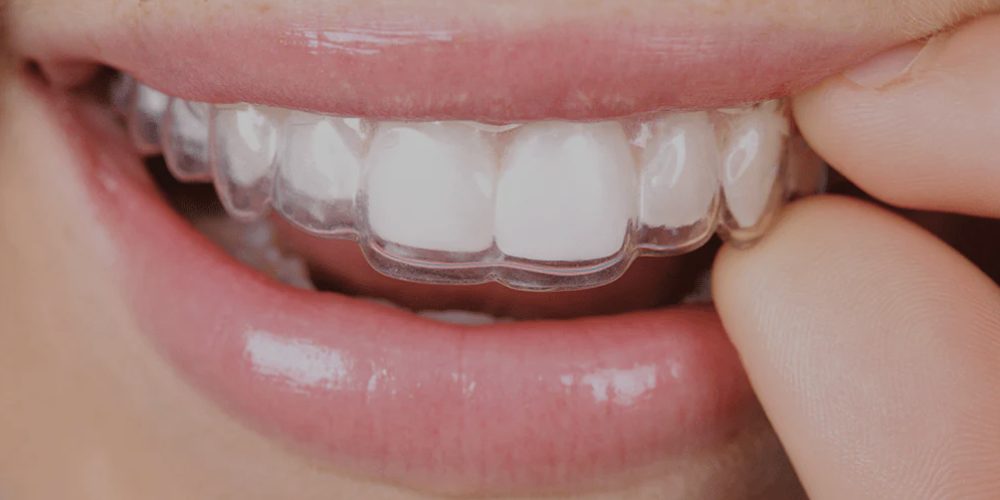
Bucket 2: Case-specific custom fabrications. Retainers (Hawley, Vivid, lingual bonded), Class II correctors (Casper, Herbst, MARA, Twin Block), MARPE and TAD-based appliances, indirect bonding trays, custom night guards, expanders. Low SKU count, per-case ordering, lead time set by lab turnaround. This is where the standard playbook doesn’t apply, and where ortho practices either find real cost savings or quietly lose money to scattered ordering and rush fees.
Different bucket, different strategy. The rest of this guide focuses on bucket 2, because that’s where the ortho-specific opportunity lives.
How Lab Turnaround Becomes the JIT Engine
For the custom-fabrication side of your inventory, the lab’s turnaround is your supply chain. Treat it that way and the math gets simpler.
Traditional JIT for consumables works by shortening the gap between order and receipt while holding safety stock against demand variability. You can’t hold safety stock of a custom retainer that hasn’t been impressed yet. There’s nothing generic to stock. What you can do is shorten and stabilize the gap between case submission and delivery so the lab clock becomes a predictable input to your treatment schedule.
That requires two things from the lab: a turnaround you can quote in business days (not “soon”), and accountability on remakes. If a lab promises five days and delivers in eight on a third of cases, that’s not five-day turnaround. It’s eight-day turnaround with a hopeful five-day pitch, and you’ll find yourself padding the treatment calendar to absorb the variance. Padding the calendar is hidden inventory cost.
Published turnaround in business days is the test most general-dental inventory advice glosses over. At ODL we publish turnaround for each appliance category and own it. Casper, our 3D-printed Class II corrector, ships at 8 business days standard turnaround. Vivid clear retainers ship in three days. Specific numbers, not “fast.”
The second test is remake accountability. Inventory pressure builds fast when a practice has to budget for “what if this comes back wrong.” A lab that quietly rebuilds without re-billing fabrication issues lets the practice plan as if the order will arrive correct. A lab that bills for remakes pushes the practice to over-order or to maintain backup inventory of common cases, which is the opposite of what JIT is supposed to do.
Put together: a published business-day turnaround plus a no-charge remake policy is what makes the lab clock function as a JIT engine. Without both, you’re still managing inventory uncertainty, just relocated.
Case-Kit Bundling: The Highest-Impact Move
The single biggest move in ortho inventory is bundling appliances that go together into a single case order instead of ordering each component separately.
The classic example: Class II correction. A typical Class II case needs the corrector itself plus a lower retainer to manage the post-treatment position. Many practices order the corrector and the retainer as two separate cases through two separate workflows, which doubles the order-tracking overhead, doubles the touch points, and frequently doubles the shipping cost.
A bundled case kit pulls both into one order. One submission, one tracking event, one delivery. ODL’s SHIFT kit for Class II correction is built this way. You can see the bundled approach across ODL’s full appliance catalog, where related appliances (corrector plus retainer, expander plus retainer, indirect bonding plus the post-treatment retention case) are designed to be ordered together.
Bundling has a second effect that practices notice later: fewer “where’s the second piece” calls to the lab. The retainer arrives when the corrector arrives. The team isn’t chasing two timelines. Patient handoff at the appliance appointment goes cleaner because the post-treatment piece is already on the shelf when it’s needed.
If you’re building toward predictable inventory, the bundling move is where you start. It compresses ordering overhead immediately, and the savings show up in the next quarter.
Forecasting from CRM Without Buying More Software
You don’t need new software to forecast supply needs. The data is in your practice management system already.
Pull six months of completed cases by appliance type. Note seasonal pattern (school-year start, holiday gaps, summer-volume bump). For consumables, multiply average monthly usage by your distributor’s lead time and add a small buffer. For fabricated appliances, match expected case volume to your lab’s published turnaround. Order against expected volume, not against current stock level.
Practice management systems with built-in reporting (Cloud 9, Dolphin, tops, Ortho2 Edge) handle this with stock reports. Spreadsheet exports work too. The forecast doesn’t need to be precise. It needs to be roughly right and updated quarterly.
Five Inventory Mistakes That Hit Ortho Practices Hardest
These are the five patterns we see most often from the lab side, ranked by how much they cost the practice.
1. Stocking custom fabrication inputs “just in case.” Some practices stock blank retainer cases, generic models, or anticipated-appliance components as safety stock against perceived lab delays. This costs capital and rarely solves the underlying problem. If the lab can’t hit a published turnaround, the answer is a different lab, not local stock against a slow one.
2. Component-by-component ordering on bundled case types. Class II cases, expansion cases, and post-treatment retention cases all have natural bundle structures. Practices that order the components separately are paying ordering overhead twice and adding tracking complexity that compounds across the chair schedule.
3. Choosing the lab by price-per-appliance without measuring total cost. Per-unit cost is one variable. The others are turnaround variance, remake rate, and remake billing policy. A lab that’s $20 cheaper per case but bills for fabrication-issue remakes and runs three days late on 30% of orders costs more in practice. Measure total cost.
4. Treating retainer fabrication like a commodity. Retainers ship in three to five business days from most labs. Practices that don’t account for that lead time end up ordering retainers at the appliance-removal appointment instead of two weeks ahead, which produces patient gap days and risks early relapse. Vivid clear retainers and lingual bonded retainers both work well in this flow when ordered in time.
5. No portal integration with your lab. Manual prescription writing, faxing, or email-attached scans add hours per week and create handoff errors. Portal-based ordering (EasyRx, lab-native portals) takes most of that overhead out of the workflow. ODL’s case submission process handles uploads, model files, and prescription specs in one flow. If your current lab doesn’t offer portal ordering, you’re paying the cost in lost minutes across every staff member who touches a case.
The pattern under all five mistakes is the same: practices either treat the lab as a black-box vendor or pad against unpredictability. Neither works as well as picking a lab with predictable turnaround and integrating with their ordering flow.
Frequently Asked Questions
What is dental inventory management?
Dental inventory management is the process of tracking, ordering, and storing supplies a practice needs to operate, while minimizing capital tied up in unused stock and waste from expired materials. For orthodontic practices specifically, it covers two distinct categories: standard consumables (brackets, wires, supplies) and case-specific custom fabrications (retainers, appliances).
How is orthodontic inventory different from general dental inventory?
General dental inventory is dominated by high-turnover consumables that respond well to reorder points and par levels. Orthodontic inventory carries a higher share of case-specific custom fabrications that don’t fit a reorder-point model because there’s nothing generic to stock ahead of time. The custom-fabrication portion (retainers, expanders, Class II correctors, indirect bonding trays) responds to lab turnaround predictability and case-kit bundling rather than safety stock optimization. For most ortho practices, this category represents a meaningful share of total supply spend, which is why general-dental inventory advice produces uneven results in ortho settings.
What’s the difference between JIT and reorder point inventory?
Reorder point inventory keeps stock on hand and reorders when it drops below a threshold. JIT minimizes on-hand stock by timing orders to actual need.
How much should an ortho practice carry in inventory?
For consumables, target two to four weeks of typical usage as on-hand stock, plus a small safety buffer for items with variable lead time. For custom fabrications, the answer is closer to zero on-hand stock because the appliances are case-specific. The total dollar value varies widely by practice size and case mix, so the better question than “how much” is “how much capital do I want tied up vs. invested elsewhere in the practice.”
Can practice management software handle inventory too?
Most orthodontic practice management systems (Cloud 9, Dolphin, tops, Ortho2 Edge) include basic inventory reporting, which is enough for the consumables side. For deeper inventory functionality (barcode scanning, automated reorder, multi-location), practices typically add a dedicated inventory tool like Sortly or ZenOne. The fabrication side is best handled directly through the lab’s order portal rather than tracked in inventory software, since each case is unique and the lab system has the case-specific details.
A Lab That Doesn’t Add to Your Inventory Problem
Dental inventory management for an orthodontic practice is mostly about the relationship with the lab. Published turnaround, no-charge remakes on fabrication issues, portal-based ordering, and bundled case kits do more for a practice’s supply spend than any inventory software upgrade.
That’s what we build at ODL. Specific business-day turnarounds by appliance category, remake accountability, EasyRx integration, and case kits designed to ship as one order. If you’re rethinking how your practice orders, talk to us about case-kit ordering and onboarding into the portal.