Last updated: May 2026
Class II Corrector Selection: A Working Frame for Choosing Between Seven Common Options
“Class II corrector” isn’t one appliance. It’s a category that includes at least seven distinct designs, and choosing between them is most of what determines whether the case finishes in 9 months or 14, whether the appliance breaks twice or never, and whether the patient ends up in stable Class I occlusion or with relapse risk built in.
This guide is for orthodontists evaluating Class II correction options for a specific case, pediatric dentists wanting to understand the appliance category before referring out, and parents whose orthodontist mentioned a Class II corrector and didn’t have time to walk through the options. ODL fabricates the full Class II corrector line (Casper, Herbst, MARA, Twin Block, plus several intramaxillary and elastics-based options) which gives the lab a category-level perspective on which appliances fit which cases.
What “Class II Corrector” Actually Means
A Class II corrector is any orthodontic appliance designed to correct a Class II malocclusion, which is the relationship where the lower jaw sits behind where it should relative to the upper jaw. The category includes both removable functional appliances (Twin Block, Bionator) and fixed functional appliances (Herbst, MARA, Casper, Forsus, Carriere). All of them aim at the same outcome: posturing the mandible forward so the bite ends up in a Class I relationship, ideally during a growth window when condylar remodeling supports the change.
For the broader functional appliance category and where Class II correctors fit within it, see ODL’s category overview.
Removable Functional vs Fixed Functional
The first split in the Class II corrector category is whether the appliance is removable or fixed.
Removable functional appliances (Twin Block, Bionator, Activator) are taken in and out by the patient. They depend entirely on compliance to do their job. The Twin Block, the most common of this group, requires 22 to 24 hours per day of wear during the active treatment phase. When that wear actually happens, removable appliances are comfortable, hygienic, and effective. When it doesn’t, the case stalls and either restarts on a fixed appliance or runs over treatment time.
Fixed functional appliances (Herbst, MARA, Casper) are cemented or banded into place. The patient can’t remove them. Compliance with wear time becomes a non-issue, which is why these appliances are typically chosen when the orthodontist already knows the patient won’t reliably wear something removable. The tradeoff is more chairside time for placement and adjustment, higher initial discomfort, and a non-zero risk of breakage during treatment that can require unscheduled repair appointments.
A third group sits between these: intramaxillary correctors and elastics-based approaches (Forsus, Carriere Motion) that attach to fixed brackets or appliances and use spring or elastic force to gradually distalize the upper arch or reposition the mandible without acting as standalone functional appliances. These are typically used in conjunction with full fixed orthodontic appliances rather than as the primary correction.
The compliance question determines which side of this split is realistic for the patient. Everything else is downstream of that.
The Seven Common Class II Correctors
Every Class II corrector fits one of these seven categories. ODL fabricates several of them; others are commercial products from manufacturers like 3M and Henry Schein.
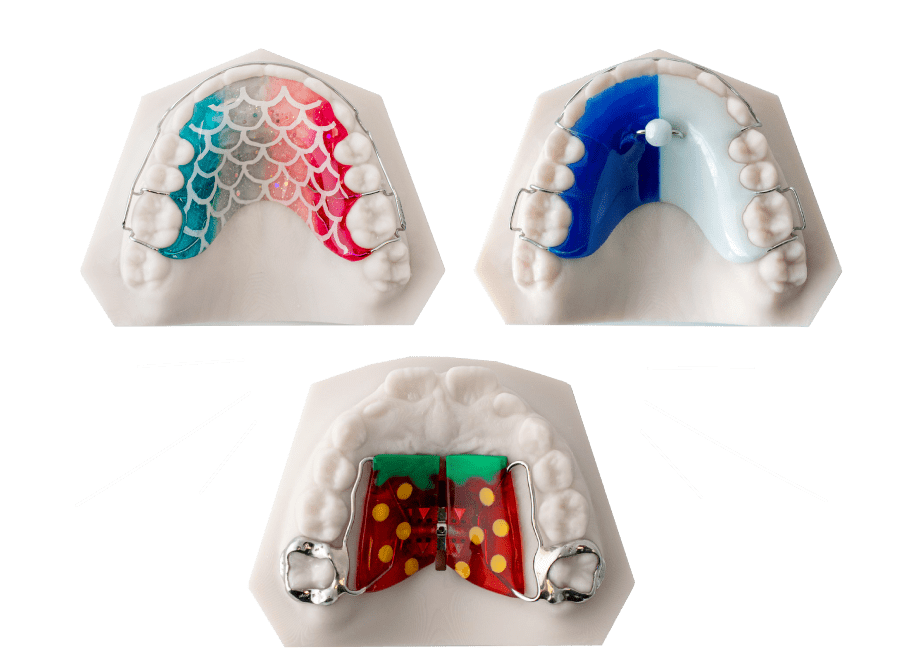
1. Twin Block (removable functional, ODL fabricates). Dr. William Clark’s 1977 design uses two acrylic blocks with inclined planes that interlock when the patient bites down, holding the mandible forward. Treatment runs 9 to 12 months. Best for compliant growing patients (age 9 through 14) with skeletal Class II Division 1. See the Twin Block guide for the deep dive on indication and compliance reality.
2. Herbst (fixed functional, ODL fabricates). Hans Pancherz’s revival of the 1909 Herbst design uses telescoping arms cemented to molar bands, holding the mandible forward continuously without depending on patient cooperation. Treatment runs 9 to 12 months. Best for non-compliant growing patients. Known issues: bracket breakage and tissue irritation during wear.
3. MARA, Mandibular Anterior Repositioning Appliance (fixed functional, ODL fabricates). Functions similarly to Herbst but uses elbows that engage when the patient closes rather than telescoping arms. Lower breakage rate than Herbst in many practices. Best for non-compliant patients where the orthodontist prefers MARA’s mechanical design.
4. Casper (fixed functional, ODL named product). ODL’s named Class II corrector designed as a Herbst alternative with reduced bulk, easier chairside activation, and fewer emergency visits. Best for orthodontists who want a fixed Class II corrector without the standard Herbst breakage and tissue management issues. See the Casper product page for the named product detail and the Casper appliance blog for the longer comparison.
5. Forsus (3M commercial product, fixed). Spring-based appliance attached to fixed brackets. Functions as a Class II corrector during fixed orthodontic treatment rather than as a standalone phase. Best when the patient is already in braces and needs Class II correction integrated into the fixed appliance phase. ODL doesn’t fabricate Forsus; this is a 3M product orthodontists order from the manufacturer.
6. Carriere Motion (Henry Schein commercial product, fixed). Designed to distalize the upper arch and correct Class II early in treatment, before braces or aligners are placed. Patient wears Class II elastics 24 hours per day during the Carriere phase (typically 3 to 6 months) before transitioning to fixed appliances or aligners. Best for cases where the orthodontist wants to address the Class II first and align teeth second.
7. Class II elastics with brackets (no separate appliance). Standard intermaxillary elastics worn between upper and lower brackets. Effective for mild to moderate Class II in compliant patients. Failure mode is the same as Twin Block: zero result if the elastics aren’t worn 22+ hours per day. Cheapest option, no separate appliance fabrication required. The Herbst alternative comparison post covers when elastics or fixed alternatives make more sense.
For ODL’s removable Twin Block specifically, see the Twin Block product page.
How to Choose: The Decision Frame
The decision tree branches first at compliance. That branch determines whether half the appliances in the category are even on the table.
Branch 1: Will this patient wear a removable appliance 22 hours per day?
If yes, the removable functional appliances open up. Twin Block is the most common pick because it’s well-validated, comfortable, and effective. Bionator and Activator are alternatives in specific clinical scenarios but are less common in current practice.
If no, every removable appliance comes off the table regardless of how comfortable or well-fabricated it is. The case moves to fixed functional appliances or to elastics-with-brackets if the patient is already in fixed orthodontics.
The compliance question can’t be settled by asking the patient or parent at the consultation. Most overestimate. Practical signals: how the patient handled prior retainers, whether they wear glasses or mouth guards consistently, how parents describe the patient’s general follow-through on multi-step routines. Patients with established compliance issues do better starting on a fixed appliance than failing on a removable one.
Branch 2: Is the patient still growing?
If yes (typically age 9 through 14 with active skeletal growth), functional appliances (Twin Block, Herbst, MARA, Casper) deliver real skeletal Class II correction by driving condylar remodeling. The growth window is the variable that makes functional appliance therapy work. Outside it, the response is dental rather than skeletal.
If no (older teens, adults), the conversation shifts toward dental correction options (elastics with brackets, Carriere Motion, clear aligners with Class II elastics) or, for severe cases, surgical evaluation.
Branch 3: How severe is the Class II?
Mild to moderate Class II Division 1 in growing patients responds well to most options in the category. Severe Class II (overjet >8mm, significant skeletal discrepancy) often needs more aggressive correction or staged treatment. Talk to the orthodontist about staged plans or surgical alternatives for cases past the boundary of single-phase functional therapy.
Branch 4: What’s the orthodontist’s clinical preference and breakage tolerance?
Among the fixed functional options (Herbst, MARA, Casper), the choice often comes down to what the orthodontist is most comfortable adjusting and how they handle emergency repair appointments. This is a real factor and worth considering openly.
Lab-Side Reality: Which Correctors Fabricate Reliably
The fabrication-side picture differs from the clinical picture, and orthodontists evaluating lab options should know the differences.
Twin Block. The most common Twin Block remake driver is bite registration. The appliance posters the mandible exactly where the registration tells the lab to hold it. If the registration captures a habitual posture rather than the planned therapeutic position, the appliance posters the bite to the wrong place. ODL has internal protocols to flag suspect bite registrations before fabrication starts, but the registration itself is on the orthodontist’s side. Good registrations produce reliable Twin Blocks.
Herbst. Bracket breakage is the primary issue, both during fabrication and during patient wear. Herbst designs require precise band selection and accurate scan or impression detail at the molars. Wear-side breakage is partly an appliance characteristic (telescoping arms have moving parts that wear over time) and partly a patient compliance question (hard foods, sticky foods, and contact sports increase breakage rates significantly).
MARA. Lower breakage rate than Herbst in most practices, but the elbow components require precise fabrication tolerances. ODL’s MARA fabrication protocol includes additional QA steps on the elbow geometry to reduce in-wear failures.
Casper. Designed by ODL specifically to address Herbst breakage and tissue management issues. Reduced bulk, easier activation, fewer emergency repair visits in the practices that have switched. Fabrication tolerances are tighter than Herbst because the design has less mass to absorb fitting errors. Bite registration accuracy matters for Casper similarly to how it matters for Twin Block.
Forsus, Carriere Motion. Manufactured by 3M and Henry Schein respectively. Lab fabrication isn’t part of the workflow on these products; orthodontists order direct from the manufacturer.
Herbst breakage is a known tradeoff with the appliance design, not a defect in any specific lab’s fabrication. The decision to use Herbst, MARA, or Casper should account for the orthodontist’s tolerance for emergency repair appointments and the patient’s compliance with avoiding hard foods. Casper exists as an option because that tradeoff bothers some orthodontists enough to want a redesigned alternative.
For Orthodontists: What the Lab Needs From Your Rx
This section is for orthodontists submitting Class II corrector cases to ODL. Parent readers can skip to the FAQ.
Across the Class II corrector line, the Rx requirements are appliance-specific:
- Twin Block: Upper and lower scans or impressions. Bite registration in the planned therapeutic position (not centric occlusion). Adams clasp configuration if non-default. Midline screw inclusion if expansion is part of the plan. Phase 2 retainer note for fabricating both at once.
- Herbst, MARA, Casper: Upper and lower scans. Detailed band fit information at first molars. Bite registration in the planned advancement position. Note any specific concerns about tissue management or chairside time preferences (this affects fabrication choices on Casper specifically).
- Forsus, Carriere Motion: Order direct from manufacturer; ODL doesn’t fabricate these.
- Twin Block Phase 2 retainer (post-active treatment): Retainer fabrication with the corrected occlusion as the base; not the original pre-treatment scan.
For complex cases, borderline indications, or when switching from one appliance type to another mid-treatment, submit the case for review before fabrication. A short conversation about bite registration, clasp configuration, or design preference prevents most remakes and chairside surprises.
When to Call Before You Submit
A few cases are worth the 5-minute conversation before the Rx goes in:
- Switching a patient from a removable appliance to a fixed appliance after compliance failure
- Severe Class II where single-appliance correction may not be enough
- Cases at the upper end of the growth window (15 to 17) where skeletal response may be limited
- Cases needing combination expansion plus mandibular advancement
- Borderline indications where the orthodontist is debating between Casper, Herbst, and MARA
The conversation takes less time than a remake or a treatment-failure conversation later.
Frequently Asked Questions
What is a Class II corrector?
A Class II corrector is any orthodontic appliance designed to correct a Class II malocclusion, where the lower jaw sits behind where it should relative to the upper jaw. The category includes removable functional appliances like Twin Block, fixed functional appliances like Herbst, MARA, and Casper, plus elastics-based options used with fixed brackets.
What’s the difference between Class II Division 1 and Division 2?
Class II Division 1 has the upper incisors tipped forward, creating noticeable overjet. Class II Division 2 has the upper incisors tipped back or upright, often with a deep overbite rather than visible protrusion. Both are Class II skeletal relationships; the dental presentation differs. Most functional Class II correctors are designed for Division 1 cases; Division 2 sometimes needs different mechanics.
How long does Class II correction take?
Active functional appliance therapy typically runs 9 to 12 months. A second phase with retainer or fixed orthodontics usually follows for another 12 to 18 months, putting total treatment time at roughly 24 to 36 months when full correction is needed.
Which Class II corrector is most comfortable?
Once adapted, Twin Block tends to be the most comfortable because it’s removable and has no metal hardware sitting against tissue continuously. Among fixed appliances, Casper has reduced bulk compared to standard Herbst and tends to cause less tissue irritation in practice.
Can adults get a Class II corrector?
Adults can get fixed Class II correctors and elastics-based options (Carriere, Forsus, Class II elastics with brackets), but skeletal correction is much more limited because the growth plates have closed. Adult Class II treatment is typically dental compensation rather than true skeletal correction. Severe adult Class II often involves orthognathic surgical evaluation.
What’s the most common Class II corrector?
For growing patients, Twin Block (removable) and Herbst (fixed) are the two most commonly prescribed appliances in current practice. Newer fixed options like Casper are growing in adoption among orthodontists looking for Herbst alternatives.
Does insurance cover Class II correction?
Coverage varies significantly by plan and region. Most orthodontic insurance plans cover Class II correction as part of standard orthodontic treatment, but specific appliance choices may have different coverage rules. The orthodontist’s office can usually verify coverage before fabrication.
For more general clinical reference on Class II correction, the AAO clinical resource is a useful starting point.
A Last Note
Class II corrector selection is a working decision, not a clinical preference. Compliance, growth window, case severity, and orthodontist tolerance for breakage and chairside time all factor in. The right appliance for one patient is the wrong choice for another, and getting the decision right is most of what determines whether treatment finishes on time and stable.
If you’re an orthodontist evaluating ODL for Class II corrector fabrication or considering switching from one appliance type to another, you can submit the case for review and we’ll walk through the decision and the Rx with you before fabrication starts.