






A band and loop space maintainer is the workhorse for holding the space left by a single lost primary molar. It is simple, well tolerated, and for the right case it prevents the drift and space loss that turns a straightforward eruption into a crowding problem later. The clinical decision is not whether to maintain the space, but whether a band and loop is the right appliance for this case, how to design it so it holds without blocking eruption, and how to keep it from decementing before its job is done.
What is a band and loop space maintainer?
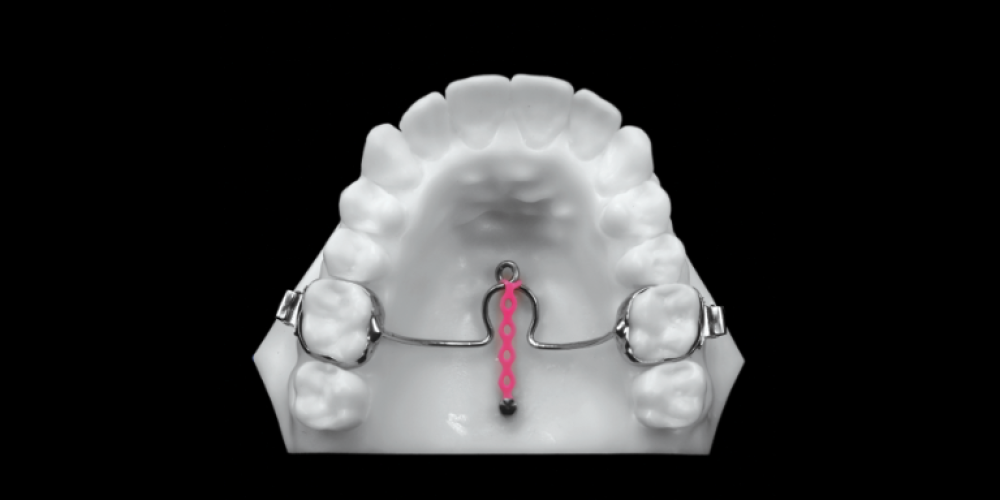
A band and loop is a fixed, unilateral space maintainer made of a stainless steel band cemented to an abutment tooth and a wire loop that extends across the edentulous space to contact the tooth on the far side. The loop holds the space open so the neighboring teeth cannot drift into it before the permanent successor erupts. It is passive: it maintains space rather than moving teeth, and it does not restore chewing function or prevent over-eruption of the opposing tooth.
How it works
The band anchors the appliance to the abutment, usually the tooth immediately distal to the space. The loop is contoured to sit just off the tissue and to contact the mesial surface of the tooth on the other side of the gap at the correct width. That contact is what preserves the arch length. Because it is cemented, it does not rely on patient compliance, which is why it is the default for younger patients.
When to use a band and loop
- A single primary molar has been lost or extracted, most commonly the first primary molar.
- There is a sound abutment tooth to band on one side of the space.
- The permanent successor is not close to eruption (confirm with a radiograph).
- The loss is unilateral. For bilateral loss, a lower lingual holding arch or a Nance is more efficient than two separate band and loops.
Placement timing and radiographic assessment
Timing is a radiographic decision, not just a clinical one. Before placing a maintainer, take a radiograph to assess the permanent successor: how much root has formed and how much bone covers the crown. As a rule of thumb, if the successor has minimal root development and a full layer of bone over it, eruption is far off and a maintainer is warranted. If the crown has erupted through bone and root formation is well advanced, the tooth may erupt soon enough that a maintainer adds little. This assessment also tells you how long the appliance will need to stay in, which frames the recall schedule. Re-evaluate at each recall, because eruption timing shifts.
Design and components
Two parts decide whether a band and loop lasts: the band and the loop wire, joined by a solder connection. The details matter:
- Band: a well-fitted stainless steel band on the abutment. Fit is everything here, because a loose band is the number-one failure mode. The band should be seated to the correct depth without impinging on tissue.
- Loop wire: typically a heavier stainless steel wire (around 0.036 inch / 0.9 mm) so the loop is rigid enough to hold the space without distorting under function.
- Contour and clearance: the loop should clear the gingiva by roughly 1 mm so it does not impinge on tissue, and it must contact the adjacent tooth at the contact point to hold width without blocking the eruption path of the successor.
- Solder joint: a clean, strong solder connection between band and loop, since a failed joint is a common breakage point.
Band and loop vs other space maintainers
Matching the appliance to the case is the whole game:
- Band and loop: unilateral, single-tooth space, abutment present. Simple and reliable, but does not restore function or hold multiple spaces.
- Crown and loop: the same design when the abutment needs a stainless steel crown anyway (extensive caries or a large restoration). The loop attaches to a crown instead of a band.
- Distal shoe: used when the second primary molar is lost before the first permanent molar has erupted. A distal extension guides the erupting first molar. A band and loop cannot do this because there is no distal abutment to contact yet. ODL does not fabricate the distal shoe.
- Lingual arch (LLHA) or Nance: the choice for bilateral or multiple space loss, holding both sides from a single appliance. See the full space-maintenance line.
- Transpalatal arch: maintains molar width and position in the upper arch; see the TPA.
Maxillary and mandibular cases follow the same principles, though esthetics and tissue contour in the upper arch can influence loop design.
Clinical workflow, from scan to cementation
The appliance is only as good as the record it is built from. A typical digital workflow runs:
- Select and fit the band on the abutment chairside.
- Scan or impress the arch with the band in place so the lab captures the abutment and the space accurately.
- Lab fabrication: the band and loop is built to your specification, with the loop bent to the correct width, contour, and tissue clearance.
- Cementation: seat and cement the appliance, confirming the loop contacts the adjacent tooth and clears the tissue.
- Recall: monitor at each visit for band integrity, tissue health, and eruption progress.
Common failure modes and how to avoid them
Most band and loop problems trace back to a handful of causes, and most are preventable with fit and monitoring:
- Decementation: the most common failure. A precisely fitted band and clean cementation are the best defense. A loose band that goes unnoticed lets the space collapse.
- Caries under the band: a poorly adapted band or leaked cement invites decay on the abutment. Fit and hygiene matter.
- Solder or wire failure: a weak solder joint or an underweight loop wire can break under function.
- Loop distortion or impingement: a loop that is too light distorts and loses the contact; one contoured too close to tissue causes irritation.
A digital workflow reduces the biggest of these, because a laser-sintered or precisely formed band seats better than a hand-adapted one and resists decementation.
How long it stays in and aftercare
A band and loop typically stays in until the permanent successor is ready to erupt, which can be months to a few years depending on the tooth and the patient’s age. Monitor it at recall for band integrity, tissue health, and eruption progress, and remove it once the successor breaks through. Advise patients and parents to avoid sticky foods that can dislodge the band, to keep the area clean around the loop, and to return promptly if the appliance feels loose so a decementation does not go unnoticed and let the space collapse.
Cost and coding
The cost of a band and loop depends on the arch, whether a band or a crown is used, and your lab. The larger economic factor is fit and remakes: a precisely fitted band that does not decement avoids repeat chair time and recementation visits. Fixed unilateral space maintainers are documented under the standard space-maintainer procedure code; confirm the current code and any per-arch details with your billing.
How ODL fabricates band and loop space maintainers
ODL fabricates space maintainers in our FDA-cleared facility from your scan, with precisely formed bands and loops built to seat cleanly and hold the space. We make band and loop, crown and loop, and reverse band and loop, and because each case lives as a digital file, reorders and adjustments are fast.
Space maintainers by ODL
Need a band and loop that seats and stays put?
ODL fabricates band and loop, crown and loop, and reverse band and loop maintainers to your scan, with precise bands built to resist decementation. Fabricated to fit and shipped on time.
Order a space maintainerBand and loop space maintainer FAQ
What is a band and loop space maintainer used for?
It holds the space left by a single lost primary molar so the adjacent teeth do not drift in before the permanent successor erupts, preserving arch length.
How does a band and loop space maintainer work?
A band is cemented to an abutment tooth and a wire loop spans the space to contact the tooth on the other side. The loop keeps the gap open. It is passive and cemented, so it maintains space without relying on patient compliance.
When do you use a band and loop vs a distal shoe?
Use a band and loop when there is a tooth on the far side of the space to contact. Use a distal shoe when the second primary molar is lost before the first permanent molar has erupted, because there is no distal abutment yet and the erupting molar needs guidance.
How long does a band and loop space maintainer stay in?
Until the permanent successor is ready to erupt, which can range from several months to a few years. It is monitored at recall and removed once the successor breaks through.
What are the disadvantages of a band and loop space maintainer?
It maintains a single unilateral space only, does not restore chewing function, does not prevent over-eruption of the opposing tooth, and can decement if the band fits poorly, which requires monitoring.
What are the different types of band and loop space maintainers?
The main variants are the standard band and loop, the crown and loop (the loop attaches to a stainless steel crown when the abutment needs one), and the reverse band and loop, where the band is placed on the mesial abutment.
What wire is used for a band and loop space maintainer?
The loop is typically bent from a heavier stainless steel wire, around 0.036 inch (0.9 mm), rigid enough to hold the space without distorting, and soldered to the band.