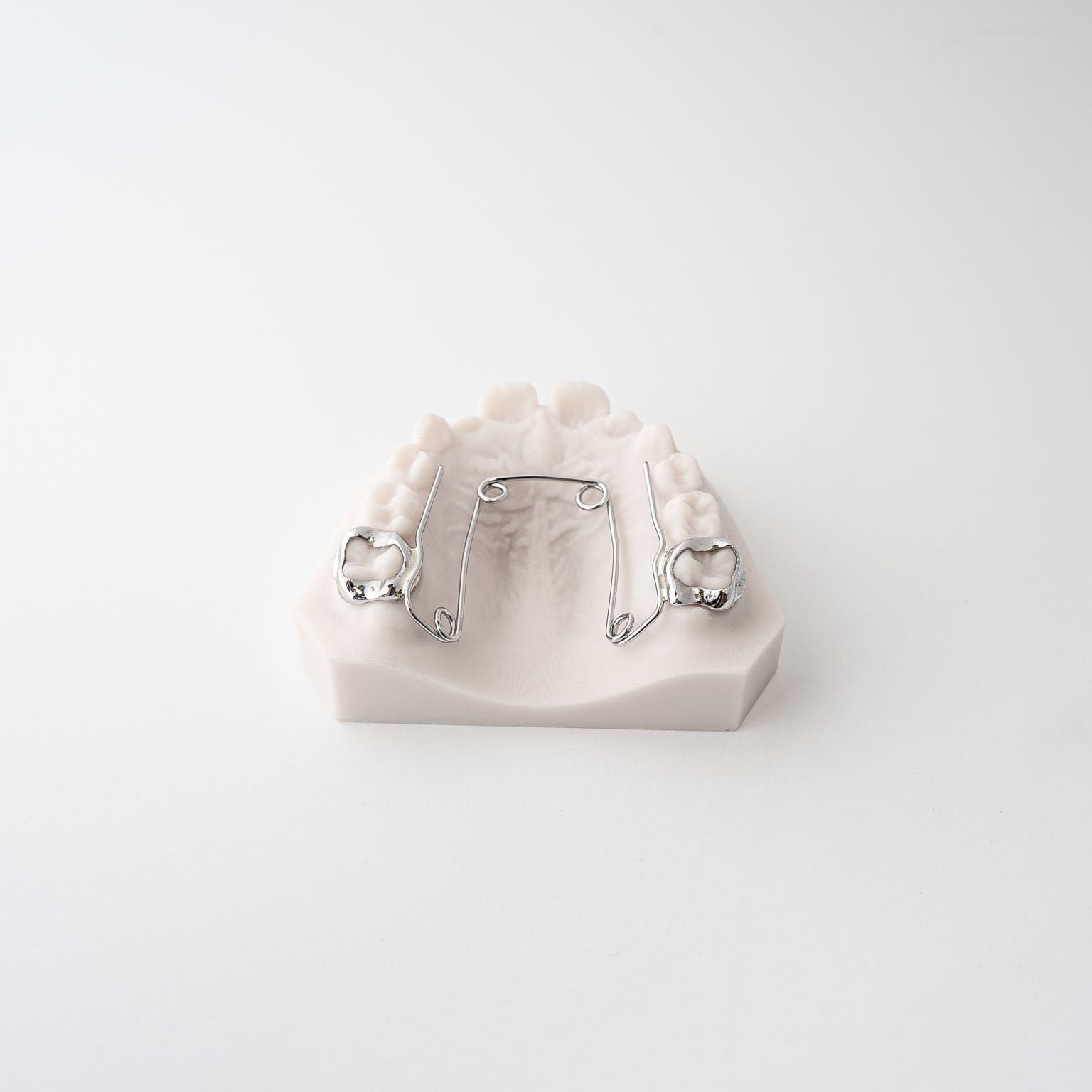
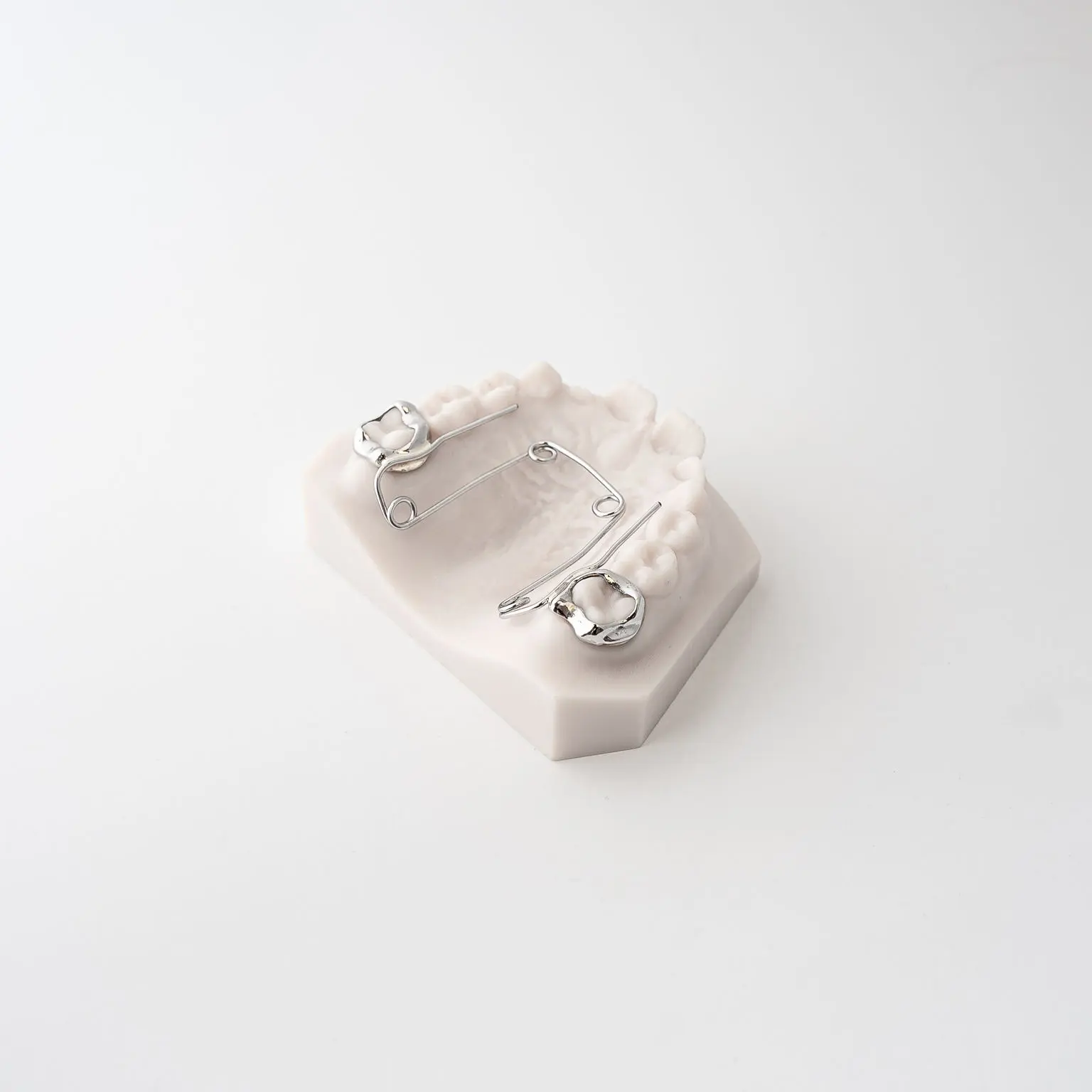
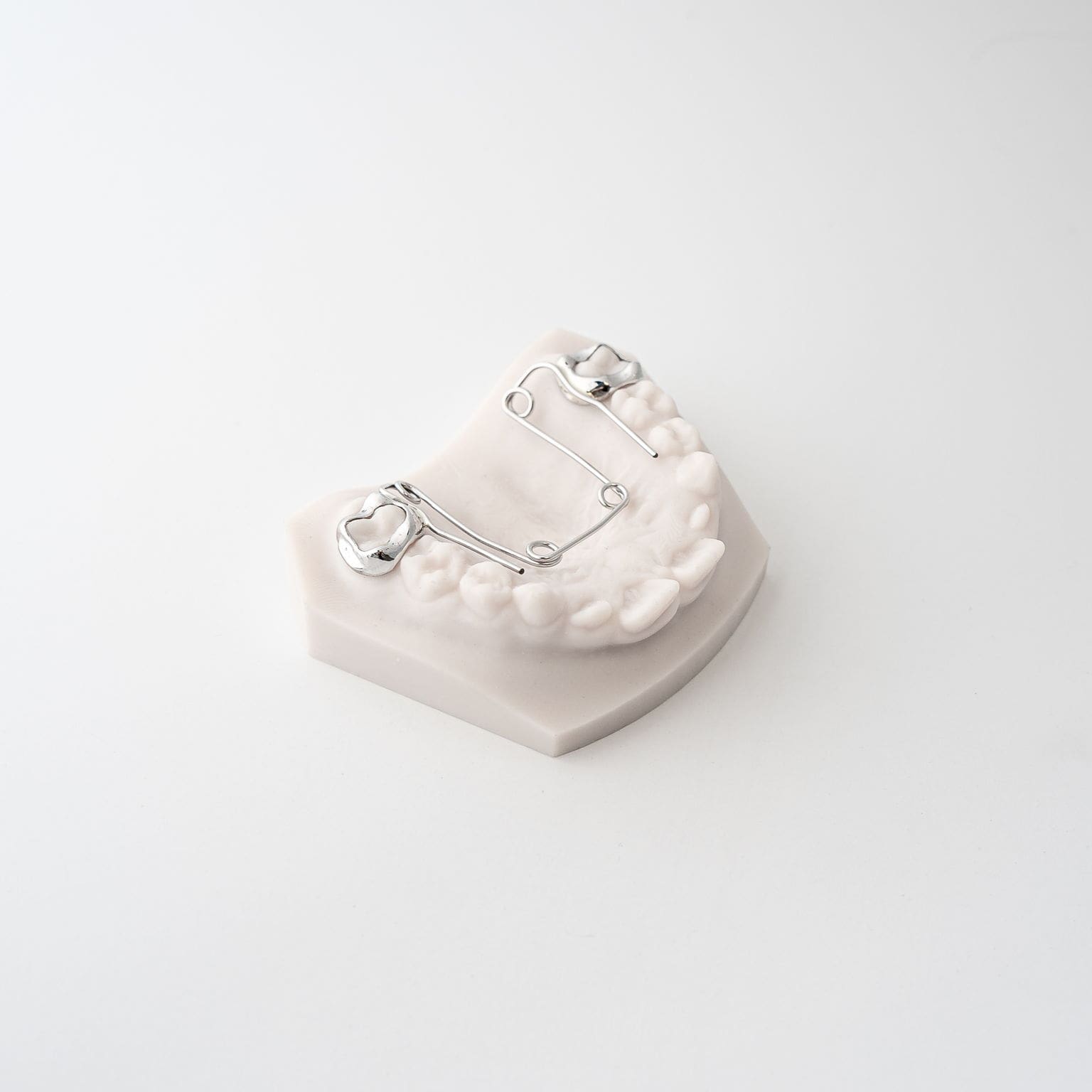
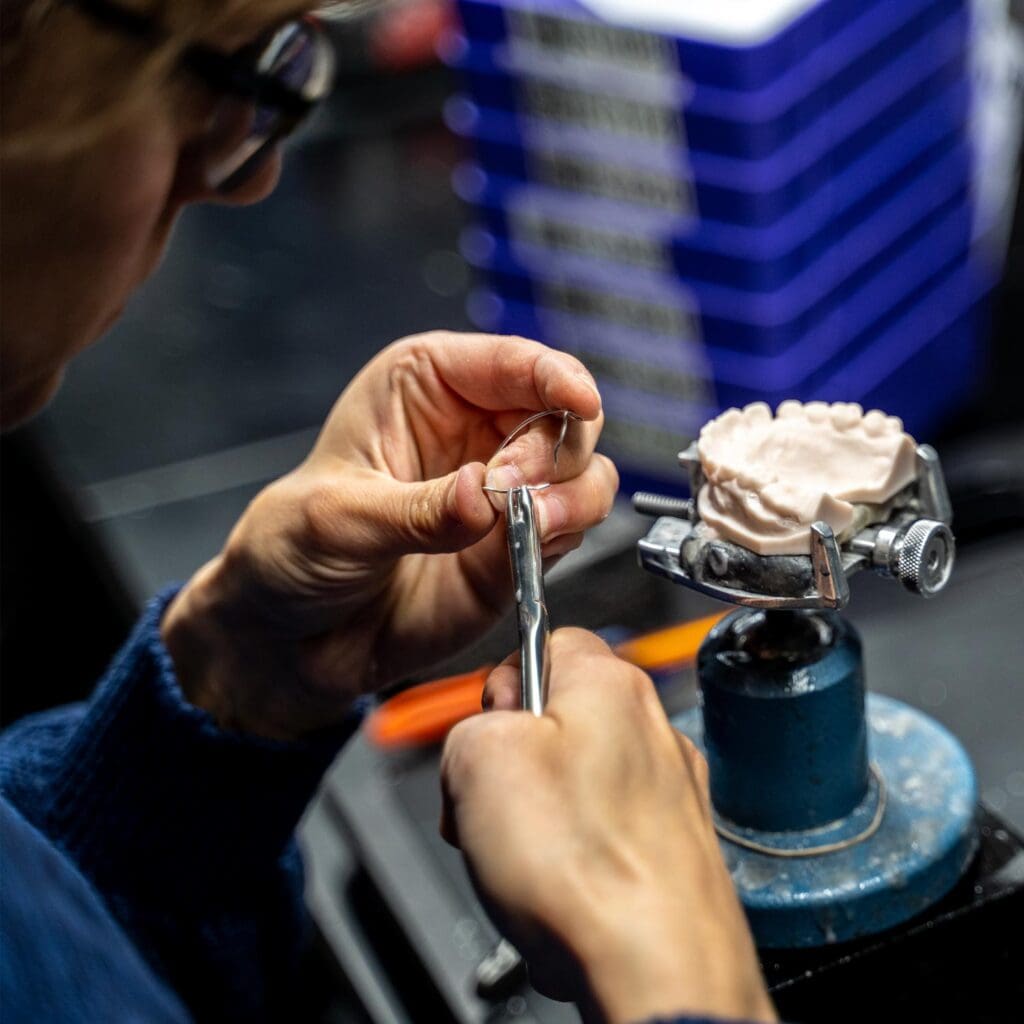
There are two ways to activate the quad helix before placing it in the mouth. Ricketts et al. (1979) originally suggested that operators activate the appliance with three-pronged pliers to incorporate expansion and molar-rotating force. Another method proposed by Kholoki (1995) employs an arch form chosen from a pentamorphic chart that serves as a pattern for regulating the quad helix.
This appliance should be cleaned every day with toothpaste and a soft toothbrush, morning and night. Encourage the patient to give sufficient time to clean thoroughly around the appliance, gums, teeth, and bands to maintain proper hygiene and prevent inflammation. 3 minutes is recommended.
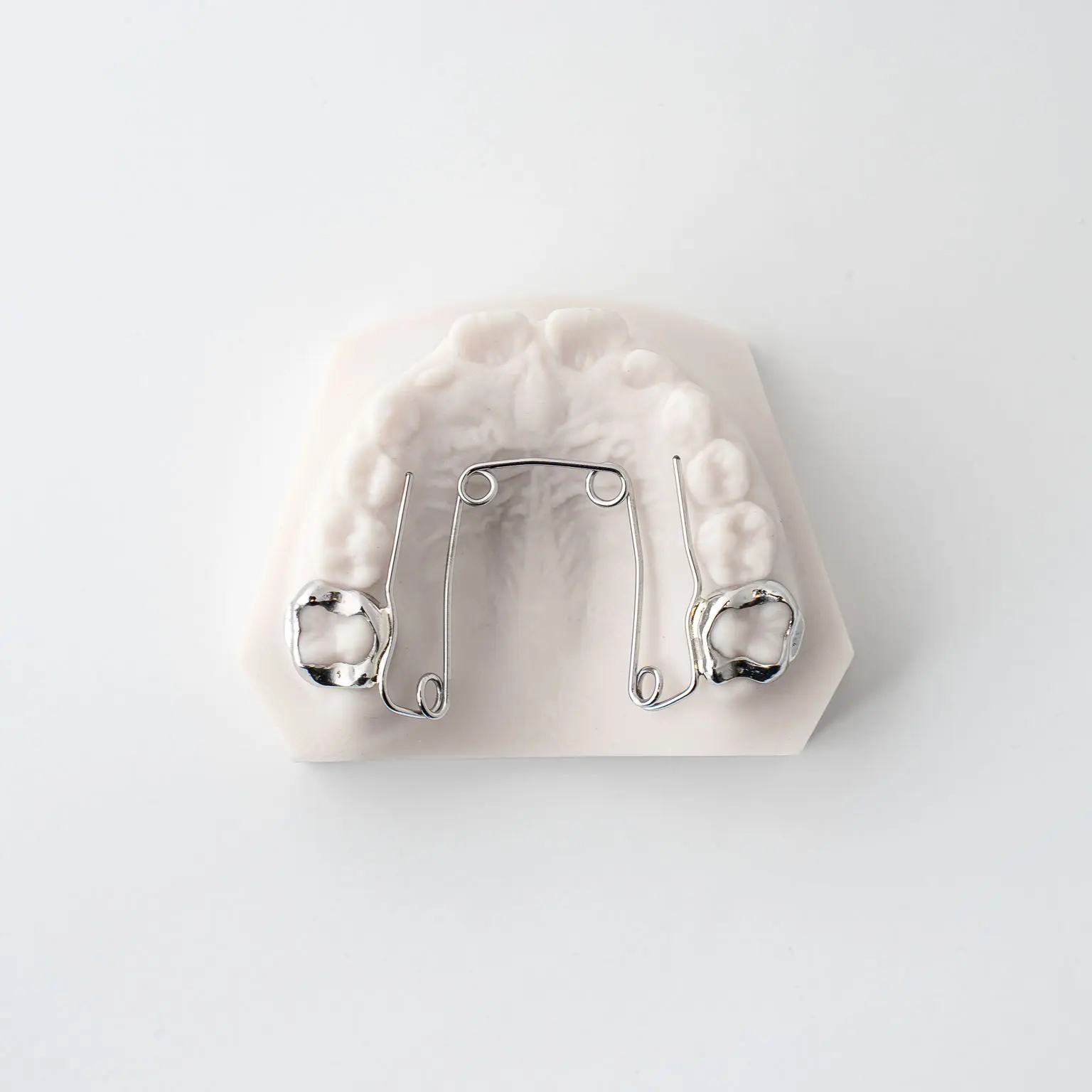
Robert Murray Ricketts invented the quad helix appliance in 1975. The quad helix is an orthodontic appliance that’s used to treat a variety of issues, including: Crowded teeth, Crossbite, Narrow jaw.
Ricketts based the quad helix on Porter’s W arch, which was originally used to treat cleft palate patients. Ricketts added four helical loops to the W arch, which increased the wire length and made the appliance more flexible. The longer wire provided a greater range of activation, which softened the forces and made it easier to control molar rotations.
The quad helix is made of stainless steel wire and is cemented to bands that are attached to the patient’s molars. The length of the palatal arms can be adjusted depending on which teeth are in a crossbite
We’re driven by hard-work and a relentless passion for dental excellence. It’s simple. ODL’s highly skilled lab technicians utilize the finest materials available to achieve ideal results for you and your patients. We stand by our craftsmanship and strive to exceed your expectations with every appliance.
"*" indicates required fields
Get 40% Off All New Appliances!
Offer Ends October 31st!