





Last updated: May 2026
Where Profit Actually Hides in an Ortho Practice (and What to Pull First)
Two practices, same town, same chair count, same case mix. One nets twelve points higher than the other. The same consultancy worked with both.
The difference isn’t case acceptance. It isn’t fee structure. It isn’t marketing spend. It’s the time the team spends on vendor friction. Chasing orders. Rebooking patients after lab slips. Handing scattered case kits between three suppliers when one would do. Multiply those minutes by every case across a year and the gap shows up as twelve points on the P&L.
Most orthodontic practice management content focuses on the revenue side, because that’s where consultancies make their pitch. Case acceptance is the most visible lever, fee optimization is the most measurable, marketing produces the cleanest before-and-after slides. None of that is wrong. But for most practices, the larger immediate win is on the overhead side, and the largest controllable overhead category that responds to operational fixes isn’t staffing or rent. It’s the vendor and supply layer that touches every clinical day.
This guide reframes orthodontic practice management around the operational layer most consultancies skip. We’ll cover what “practice management” usually means and what it leaves out, the two profit levers every practice has, why vendor consolidation produces results consultants don’t claim credit for, the chair-time waste most practices don’t track, six operational habits that compound, and where to start if you’re reading this on a Tuesday and want to do something about it this week.
What “Practice Management” Usually Means (and What It Skips)
Open any orthodontic practice management guide written in the last five years and the table of contents is predictable: case acceptance, treatment coordinator training, fee structure, marketing channels, KPI tracking, software comparisons. Each of these matters. None of them are wrong to focus on. But they share a common bias, which is that they’re all revenue-side levers.
Revenue-side levers are popular because they’re measurable in marketing copy. A 15% improvement in case acceptance is a clean number to put on a consultancy’s case study page. So is a 22% reduction in patient acquisition cost. So is a 9-point increase in conversion from consult to treatment start. These numbers all live on the top of the P&L, which is where consultancy pitches naturally focus.
The overhead side is messier. It’s harder to attribute, harder to package into a quarterly review, and harder to sell as a deliverable. According to Roger Levin’s analysis published in Orthodontic Products, most orthodontic practices run overhead that is four to six percent too high, and a one-point reduction in overhead is mathematically identical to a one-point increase in profit. On a $1.5 million practice, four points of overhead reduction is sixty thousand dollars to the bottom line, every year, without raising fees or running a marketing campaign.
The work to get that four points isn’t glamorous. It’s vendor consolidation. Standardizing case workflows. Reducing the number of times your treatment coordinator picks up the phone to chase a lab order. Tightening the gap between case submission and appliance delivery so the schedule stops absorbing variance. These don’t make for clean case studies, which is why most practice management content skips them, which is why they remain available levers in most practices.
There’s a second reason consultancies skip the overhead side: their fee structures are often built on revenue gains. A consultant who improves your case acceptance by 15% can charge a percentage of the gain. A consultant who reduces your vendor count from six labs to two has nothing comparable to invoice against. The economics of the consulting model push toward the revenue side, and most practice owners follow the model because that’s the content they see.
What you’re left with is a market full of management advice that solves the second most important problem. The first most important one sits in the relationship with the people who fabricate your appliances and ship your supplies, and it’s where this guide focuses.
The Real Profit Levers in an Ortho Practice
Every orthodontic practice has two profit levers. Revenue and overhead. Most practice management content covers the first in depth and the second in passing. This guide reverses the ratio.
Lever 1: Revenue. Case acceptance rates, fee structure, treatment plan breadth, patient acquisition cost, marketing channel mix, treatment coordinator effectiveness. Revenue gains tend to come in big visible jumps after a focused project: a new case-acceptance training, a fee restructure, a marketing channel that suddenly works. Visible, measurable, easy to write about.
Lever 2: Overhead. Staffing efficiency, vendor and lab spend, supply inventory carrying cost, software stack, real estate, the time cost of operational friction. Overhead gains tend to come in many small compounding wins that add up to real numbers without ever producing a single dramatic before-and-after slide. Less visible, harder to attribute, equally real on the P&L.
The honest answer to “which lever should I pull?” is both, and in the right order. Revenue gains can be wiped out by overhead creep. Overhead reductions can plateau without a revenue layer underneath them. But most practices have already worked the revenue side and have under-worked the overhead side, especially the operational portion that sits in vendor and supply friction. That’s the gap this guide focuses on. If you want the inventory-side specifics, we covered that separately in dental inventory management for orthodontic practices.
Vendor Consolidation: The Move Most Consultants Skip
Vendor count is a profitability metric most practices never track. It should be.
Every additional appliance vendor adds a fixed cost per case that doesn’t appear on the invoice. A separate portal login. A separate Rx workflow. A separate prescription specification quirk. A separate turnaround variance to account for. A separate point of contact when a case slips. A separate accounts payable line. A separate set of remake policies. A separate quality bar your team has to remember.
None of those line items shows up as “vendor management overhead” in your P&L, because that category doesn’t exist. The cost lives inside your treatment coordinator’s day, your lab tech’s order desk, your accounts payable cycle, and your chair schedule. It’s distributed across the practice, which is why it’s invisible, which is why it persists.
Consultancies don’t focus here for the reason mentioned above: it’s hard to invoice against. But the math is straightforward. A practice running six appliance vendors carries roughly six times the per-case workflow overhead of a practice running one. You don’t get a six-times-better outcome from six vendors. You get a slightly broader product mix and a substantially larger ordering burden.
The fix isn’t “manage your vendors better.” It’s “reduce the number of vendors you touch.” Most practices can collapse three or four ordering relationships into one without losing meaningful product breadth, because the appliance categories overlap heavily across labs and the practice-specific quirks usually come down to a handful of named products.
The other reason vendor consolidation underperforms in consulting frameworks: it requires the practice to actually evaluate which vendor wins the consolidation. That’s an audit, not an engagement. You pull six months of orders, list every appliance category by vendor, and ask which lab covers the most categories at acceptable quality and turnaround. The answer is usually two vendors, sometimes one. The work to get there is a Saturday.
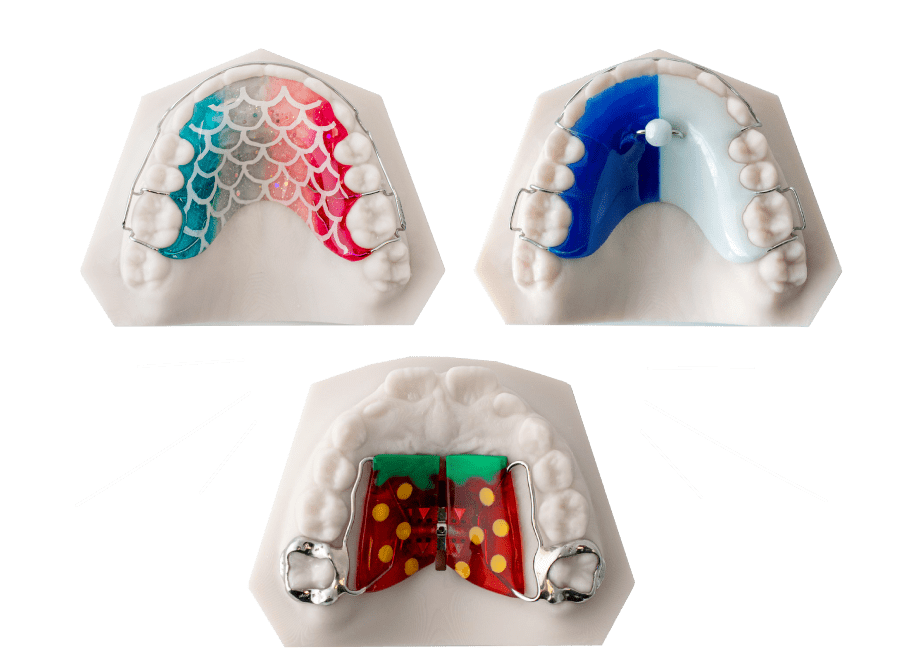
A practical starting point: list everything you ordered in the last quarter. Group by appliance category (Class II correctors, retainers, expanders, indirect bonding, night guards, aligners). Note the vendor for each. Count distinct vendors. If the number is more than three for a single-location practice, you have consolidation room. ODL’s full appliance catalog covers most of these categories from one lab with one portal login.
The wins from consolidation compound in directions practices don’t initially expect. Patient handoffs at the appliance appointment go cleaner because the post-treatment retention case is from the same vendor as the corrector. Accounts payable cycles simplify. New staff members ramp faster because there’s one Rx system instead of three. None of these show up as a single line item, which is why the gain accumulates quietly across the year.
Chair-Time Waste Most Practices Don’t Track
Chair time is the most expensive operational resource a practice has, and the categories of chair-time waste that come from vendor failures are the ones most practices don’t track because they live across multiple appointments.
The pattern: a lab quotes five days, delivers in eight on the third case of the week. The schedule was built assuming the appliance arrives day five. By day eight, the patient has already shown up, been rebooked, called for an update, and called back to confirm. Each touch is fifteen minutes of front-desk time. The patient is mildly annoyed. The original appointment slot was held for someone else who couldn’t be slotted in time. Chair sits empty.
Multiply that pattern across a year and the chair-time waste from variable lab turnaround becomes a meaningful overhead category that almost no practice tracks because the friction is distributed across multiple appointments, multiple staff members, and multiple weeks.
The fix here isn’t measuring chair-time waste retroactively. It’s choosing vendors with published business-day turnaround and accountability on slip days. Casper, our 3D-printed Class II corrector, ships at 8 business days standard. Vivid retainers ship in three days. Specific numbers, not “soon.” A lab that quotes a number and hits it lets the practice build the schedule against that number, which is what makes the lab clock function as a planning input instead of a planning unknown.
Six Operational Habits That Compound
The orthodontic practice management gains that show up at year-end usually came from habits, not projects. Habits compound across every case. Projects show up once and fade.
Six habits worth installing:
1. Single-vendor case audit, every quarter. Why it matters: Catches vendor sprawl before it compounds. Treatment coordinators tend to add vendors faster than practices subtract them. A 15-minute quarterly review reverses the drift.
2. Published turnaround posted at the order desk. Every active lab’s standard business-day turnaround on a visible note. Eliminates the “I think it’s about a week?” guesswork that creates schedule padding and patient miscommunication.
3. Portal-only ordering for all custom fabrications. Why it matters: Eliminates the fax-and-email handoff that produces most prescription errors. Portal entries also create searchable history, which feeds quarterly reviews. Submit cases through the Vivid portal or your lab’s equivalent. Not by fax.
4. Case-kit ordering for bundle-able appliances. Class II correction with the retention case, expansion with the post-treatment retainer, indirect bonding with the next-step appliance. One submission per case instead of three.
5. Standing five-minute weekly review of pending orders. Why it matters: Catches slip-day patterns early instead of reactively. The treatment coordinator who flags a third late delivery from the same vendor in one quarter is doing inventory analysis without calling it that.
6. Standardized retention workflow at treatment completion. Every patient gets the same retention timing, the same retainer type unless contraindicated, the same handoff sequence. Variation here is invisible overhead because it lives in each patient’s case rather than in the schedule. Vivid clear retainers and lingual bonded retainers both fit a standardized post-treatment flow.
None of these are dramatic. Three of them take less than fifteen minutes a week to install. The reason they compound is that they convert variable decisions into default workflows, which is what habit-driven operations beat project-driven operations on every long enough timeline.
Where to Start If You’re Reading This on a Tuesday
Pick one. Don’t pick three.
If your vendor count is above three, start with the consolidation audit. Pull last quarter’s orders, group by appliance category, count distinct vendors. The audit takes a Saturday. The decisions take two weeks. The savings start the next quarter.
If your vendor count is at three or fewer, install the portal-only ordering habit. It’s the single workflow change that produces the largest reduction in prescription errors and the cleanest case history for future review.
If both are in place, audit chair-time waste against your slowest-turnaround vendor. The data is already in your scheduling software.
Frequently Asked Questions
What are the biggest profit levers in an orthodontic practice?
The two largest are revenue (case acceptance, fee structure, marketing) and overhead (staffing efficiency, vendor and lab spend, supply friction, software stack). Most practices have worked the revenue side harder than the overhead side, which means overhead is usually the larger immediate win available.
How much should an orthodontic practice spend on overhead?
The benchmark cited by Roger Levin in Orthodontic Products is that most orthodontic practices run overhead that is four to six percent too high relative to industry medians. Exact targets vary by practice size, location, and case mix, but a useful rule of thumb is that a one-point reduction in overhead is mathematically identical to a one-point increase in profit, without raising fees or running a marketing campaign. On a $1.5 million practice, four points is $60,000 to the bottom line annually. Tracking overhead by category (staffing, rent, vendors, software, supplies) makes the reduction work targetable.
What’s the difference between revenue optimization and overhead reduction?
Revenue optimization grows the top line. Overhead reduction shrinks expenses. Both flow to profit; overhead is usually easier to start on.
How many vendors does a typical ortho practice work with?
Most ortho practices order from three to seven appliance vendors plus separate consumables distributors, software providers, and service contracts. The appliance vendor count is the most consolidatable category. Many practices can reduce six appliance vendors to two or three without losing meaningful product coverage, because category overlap across labs is substantial and the practice-specific quirks usually concentrate in a handful of named products.
What practice management software do most orthodontic practices use?
The most common orthodontic practice management systems are Cloud 9, Dolphin Management, tops Orthodontic, Ortho2 Edge, and OrthoTrac. Each handles scheduling, treatment planning, billing, and basic inventory reporting. Specialty add-ons (Gaidge for benchmarking, Weave for communications, dedicated inventory tools like Sortly or ZenOne) layer on top. The right base system depends on practice size and integration needs more than on any single feature gap.
A Lab That Acts Like Part of Your Practice
Most orthodontic practice management content treats vendors as fixed inputs. They’re not. The lab you choose, the number of vendors you carry, and the turnaround variance you tolerate are operational decisions with direct profit impact, and they’re decisions you control.
At ODL we publish turnaround by appliance category, own remakes without rebilling fabrication issues, and consolidate most appliance categories under one portal. If you’re rethinking vendor sprawl or evaluating where overhead reduction can come from this quarter, talk to us.